
CHECKPOINT 4

Lifeboat Station - from West Sandgate, head to the traffic lights and over the road to the entrance to the beach and the RNLI Lifeboat Station

LIFEBOAT STATION
Due to the popularity of Scarborough as a trade route from Europe, shipwrecks were common in stormy weather - often within visible distance from the harbour.
Thomas Hinderwell helped to secure the first lifeboat in Scarborough in 1801 - only the third lifeboat in the entire country.
Originally consisting of two crews of 12, employed from local fishermen, there have been countless lives saved over the last couple of hundred years.
Call into the RNLI shop to find out more about the history of lifeboats in Scarborough.


The first seaside resort
Most visitors are drawn to South Bay beach for a day of fun on the golden sands - but why did British seaside holidays become so popular? Let's find out...
Healing power of the waters:
A medicinal spring was discovered in the cliffs at the end South Bay in 1625 by Thomasin Farrer, and its popularity quickly rocketed among the elite - with people travelling far and wide for its healing properties. The first spa (previously called spaw) building was created in 1700, and has been rebuilt several times over the years as it is unfortunately positioned for landslides, heavy seas and storms.
Cold water therapy was starting to become popular in the early 1700s, and the inventive bathing machines started popping up on the sands. By 1787 there were 26 bathing huts allowing women (and men) to save their modesty while enjoying the sea water.

© storiesfromscarborough.wordpress.com
Seaside holidays for everyone...
Steam trains began their route to Scarborough in 1845, and with them came thousands of visitors who wanted to bathe in the healing spa waters, and enjoy the cold water therapy of the North Sea. Scarborough very quickly became one of the most sought after seaside holiday spots in the country.
The original tradition of paddling in the sea while enjoying a day on the beach hasn’t changed much!

The August Bank Holiday, established in 1871, granted individuals several summer days off. The Holiday Pay Act of 1938 further enabled people to enjoy time away from work with regular compensation, making summer vacations available to all. The train network opened the coast up to people from all classes - and not just the elite wanting to try the spa waters.
Given the over-populated and smog-laden urban areas where many lived and worked, seaside getaways became the favoured choice for holidays in Britain.

Seaside traditions
With millions coming to the coast every summer, quite a few holiday traditions began, including:
Punch & Judy Shows
A famous past-time for the kids its origins can be found as as early as 1662. There are now only 3 permanent, full-time seaside Punch & Judy shows left in the country.


Donkey Rides
Popular with Victorian beach-goers, Bridlington actually claims to be the first seaside resort to offer donkey rides in 1895. Wearing brightly coloured saddles each with their name on display, meant the children could choose their favourite donkey. By far, the most common donkey name is Daisy.
While donkeys still grace the shores of Scarborough, a significant portion of the public deems this practice both outdated and inhumane. In 2017, a petition urging the discontinuation of this tradition amassed over 100,000 signatures.

Deck Chairs
The first patent for a folding leisure chair was filed in 1886 by John Thomas Moore, which he began producing in Macclesfield. The concept of using a single wide strip of canvas, initially olive green before transitioning to vibrant striped patterns, is attributed to a British inventor named Atkins. Often known as the 'Brighton beach chair', the term 'deck chair' first appeared in the novels of E. Nesbit (author of "The Railway Children") during the 1880s. The practice of renting out deck chairs on promenades and piers for hourly or daily use became a fixture of British coastal resorts in the early 20th century. You can still rent deck chairs along South Bay in the summer months.
Penny Arcades
Developed from travelling fairs, the arcade rose to fame in the 1930s with 2p coin pusher machines, electric shockers, and crane grabbers. However, the rise of home video games, and gambling laws meant the penny arcades in their traditional format have declined. The increasing popularity of video games in the 90s saw a slight resurgence as the only place to test out new games was often in an arcade - Street Fighter, Pacman, Donkey Kong and other epic video games all had their roots in the arcades.
Arcades have had to adapt dramatically these days, with many offering bowling, cafes and even cinemas to keep drawing people in.


Seaside food traditions:
Ice Cream
From the 19th century, ice cream vendors boomed with their “Penny Lick” offering, making ice cream affordable and accessible to all.
With the invention of the ice cream cone in the early 1900s, the takeaway ice cream market expanded - and the best place to enjoy one was on the beach during your summer holiday.
The Alonzi family (who run Harbour Bar) have been selling ice creams since the early 1900s in Scarborough. Firstly from stalls on the beach (at a tuppence a portion at the posh "Spa end", and a penny a portion near the "lifeboat end"), and then from their first ice cream bar on Eastborough.
Harbour Bar first opened on August Bank Holiday in 1945 - selling out in just 2 hours. It is still run and owned by the same family, and has become a staple in many people's seaside visit over the years.

Seaside Rock
Invented by Yorkshireman Ben Bullock, the first seaside rock was actually created for Blackpool beach.
Bullock ran a sweet stall on Dewsbury market (West Yorkshire), and many think his first sticks of rock were sold here in 1887, but quickly became a seaside tradition.
It is still handmade today - as machines are still unable to replicate the techniques needed to create the embedded lettering.

Fish and Chips
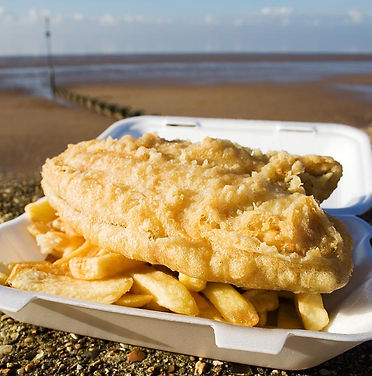
Emerging as a favourite dish in the 1860s, fish and chips became a popular seaside meal for the many travellers who didn’t have space, or money, to bring a picnic along.
Fresh fish locally caught, coupled with chips was the ideal coastal meal. It was safeguarded throughout both world wars, as one of the only dishes not to be rationed, and has continued to be a favourite of the nation.
The Lifeboat F&C Shop (bottom of Eastborough) makes the best fish and chips in South Bay. Other favourites with locals include Cappleman's (Murchison Street), Carol's Place (Columbus Ravine) and North Bay Fisheries (opposite Peasholm Park).

A spooky seafront story
A young woman of only 16, Lydia Bell, was found strangled on the beach in 1804 after sneaking out of her family home (Bell Mansion in St Nicholas Street) one evening to meet her married lover.
The daughter of a York confectioner, Lydia was warned not to meet her married soldier boyfriend. Her body washed up on the sands the next morning after she was reportedly strangled and thrown from the cliffs. Her ghost has haunted several locations around the town ever since, including Bell Mansion (now next door to Sanctuary Bar & The Scarborough Flyer pub). Her assailant denied the murder, and got away with it until finally admitting his crime on his deathbed.
People have frequently reported the ghostly figure of a young woman in a pink dress (the outfit Lydia wore the fateful night she was killed) in St Nicholas Street, and running along the seafront in a panicked manner.

THINGS TO DO
All the traditional seaside activities can be done around here, including:
-
Enjoy an ice-cream from one of the many beach front shops - watch out for the gulls though!
-
Call into the artist's studios up on the West Pier
-
Have a ride on a donkey
-
Spend a few pennies in the arcades
-
Get your rock and beach souvenirs from the shops along the front (established in 1911 John Bull is one of the oldest confectionary outlets on the East Coast. Visit their factory in Bridlington)
-
Treat yourself to come cockles, whelks, mussels and other fresh seafood at the stalls by the Lifeboat Station
-
Hire a deck chair and sit and relax for a while

CHECK POINT NAVIGATION
This section will be repeated at the bottom of every check point page, so if you want to skip ahead, or go back at any time, you can easily get to the check point page of your choice by clicking the corresponding button.
Lost your map? No problem - just download the pdf document again using the map icon, or view and download the map image at the bottom of the navigation section.


