
CHECKPOINT 14

Paradise House

Paradise
Paradise takes its name from the monastic walled garden which used to sit on this site, along with a Cistercian house. This is most likely where the 12th Century French monks grew medicinal herbs, edible plants and vegetables, planted orchards and spent time in contemplation.
In Medieval Britain, gardening was a deeply spiritual past-time for monks, probably due to the association of the Garden of Eden.
Just admire the views of South Bay from the gap in the wall, on a clear day you can see right over to Oliver's Mount - and when racing events are on, the sound of the cars and motorbikes roaring around the track travels all the way over to this spot!
PHOTO OPPORTUNITY
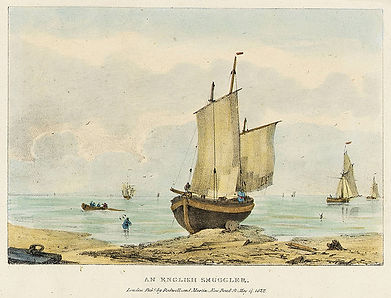
The smugglers stash
The Cistercian monks were evicted from this site in 1405 by King Henry IV. Little is known about the history of Paradise until it was inhabited by one Scarborough's most successful ship builders, James Cockerill in the late 1600s.
In the 18th century, and at the height of smuggling on the Yorkshire Coast, the old garden well (built by the monks to water their garden) was used as a stash spot. A room, deep within the well, had been carved out into the rock, and it was said to be filled to the brim with loot. It was covered by a small outhouse to disguise its existence.
Tales of hauntings at Paradise House have been passed down through the generations - however, it is believed that these stories were made up to deter people from snooping around the house and garden, especially at night when the smugglers were most active.

The father of aeronautics
In 1773, Sir George Cayley is said to have been born in Paradise House - and a blue plaque commemorates this. However, this fact is debated as Sir Cayley stated he was born in the Long Room on St Nicholas Street.
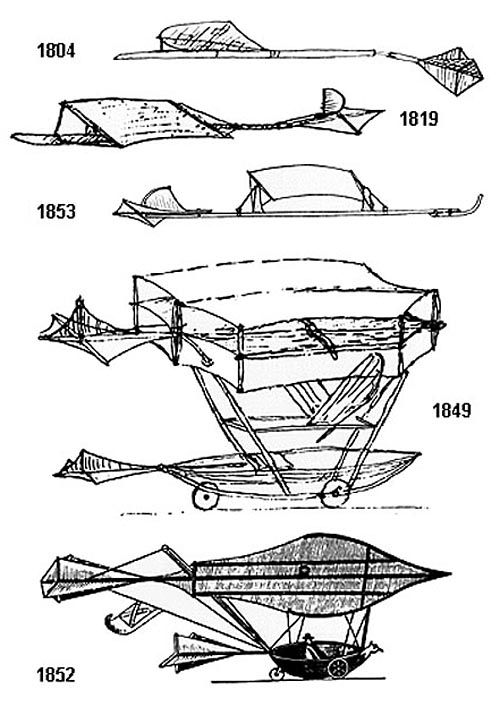
George Cayley is credited as being the "Father of Aeronautics", launching the first recorded flight carrying an adult in his fixed wing aircraft in 1804. He was well ahead of the times, as it took a century for his work to be progressed into the more well known aeroplane built by the Wright brothers in 1903.


The graham sea training school
By 1856 Paradise House had returned to its seafaring links when it was inhabited by Robert Tindall (one of the main ship builders mentioned in Checkpoint 8) and became known as Tindall House.
In 1904 the town's Mayor Christopher Colborne Graham bought the building and donated it to the town - it became Graham Sea Training School for Boys in 1917. The purpose of the school was to teach seafaring skills to secondary education aged boys, and had close associations with the Merchant Navy. Many pupils went on to have careers in the Navy, or became fishermen, ship builders, maritime engineers and more.
The headteacher in the late 1960s, Mr W Herbert, was affectionately referred to as "Peg Leg Herbert" by the pupils - due to his unfortunate limp.
The school closed its doors in the early 1970s and was converted to flats, and it is now holiday accommodation.
MOVE TO CHECKPOINT 15
Make your way down the hill to the Market Hall on Market Way - there are several routes you can take. The quickest route is down St Mary's Steps (Church Stairs Street), turning right at the end onto Longwestgate, and then left onto Friargate.
If you'd like to see some of the traditional Old Town streets filled with fishermen's cottages, take St Mary's Street and turn right onto St Sepulchre Street.

CHECK POINT NAVIGATION
This section will be repeated at the bottom of every check point page, so if you want to skip ahead, or go back at any time, you can easily get to the check point page of your choice by clicking the corresponding button.
Lost your map? No problem - just download the pdf document again using the map icon, or view and download the map image at the bottom of the navigation section.


